With this in mind, read on as we take a look at exactly what a common size financial statement is. As well as lay out the formula for you, describe the different types, and show you the limitations of common size analysis. Develop tailored reporting solutions that combine vertical analysis with other financial metrics. This makes the insights more accessible and actionable for various stakeholders.
- Vertical Analysis is a valuable tool for investors, analysts, and business owners, offering a clearer picture of a company’s financial status and trends over time.
- This approach provides a clearer picture of the company’s ongoing cash flow structure by separating one-time events from regular operations.
- They can be used in different situations and the best interpretation may come from a combined approach from both these methods.
- This offers a concise snapshot of costs, pinpointing areas that might warrant further investigation.
- The following compares the performance of two companies using a vertical analysis on their income statements for 2019.
How to Perform Vertical Analysis

The net profit margin ratio reveals how much net income is generated for each rupee of sales. cash flow For the income statement, the base amount is typically the net sales, which represents the total revenue generated from sales after deducting returns and allowances. In contrast, for the balance sheet, the base amount is total assets, while total liabilities and equity can also serve as the base since they are equal to total assets.
Advanced Applications of Vertical Analysis in Financial Planning
- You can then compare this information over time to track changes in performance.
- Arjun is a seasoned stock market content expert with over 7 years of experience in stock market, technical & fundamental analysis.
- Variable cost refers to business expenses that vary directly with the level of output or production.
- Led by editor-in-chief, Kimberly Zhang, our editorial staff works hard to make each piece of content is to the highest standards.
- Vertical analysis compares line items within one period, while horizontal analysis compares across multiple periods.
The standard base figures for the income statement and balance sheet are as follows. Finally, the net income for 2017 is \$4,810, which translates to 8.3% of net sales. This figure is particularly significant as it indicates that for every dollar of sales, the company retains what is a vertical analysis 8.3 cents after all expenses, a decrease from the 4.8 cents retained in 2018. Such a decline in net income percentage could raise concerns regarding expense management and profitability, prompting further analysis by investors and management alike.

How To Prepare Consolidated Financial Statements

All businesses, whether they are large or small, need to generate these statements to monitor their actions. Let’s walk through a detailed vertical analysis example to see these concepts in action using real income statement and balance sheet figures. With this spreadsheet set up, simply update the raw dollar amounts each period and the vertical analysis will instantly recalculate, creating an automated tool to monitor trends and comparisons over time. The key advantage of vertical analysis is improving comparability between companies. For a $10 million revenue company $1 million of R&D Bookkeeping vs. Accounting costs is clearly more significant than for a $1 billion revenue company.
While the vertical analysis formula is a valuable financial tool, it is not without its limitations. One of the main challenges is the lack of standardisation across industries, which can render inter-company comparisons less effective without adjusting for industry-specific norms. Additionally, it offers a snapshot in time and may not accurately reflect future potentials or risks without supplementary analysis or data.
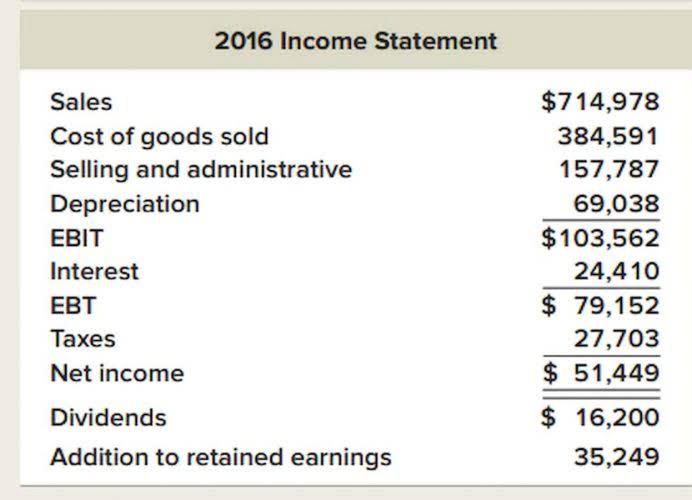
Vertical Analysis of the income statement shows the revenue or sales number as 100% and all other line items as a percentage of sales. All the line items in a vertical analysis are compared with another line item on the same statement; in the case of an income statement, it is revenue/net sales. Vertical Analysis refers to the income statement analysis where all the line items present in the company’s income statement are listed as a percentage of the sales within such a statement. It thus helps analyze the company’s performance by highlighting whether it is showing an upward or downward trend. Vertical analysis is a key tool for FP&A leaders to better understand and evaluate financial statements.

What is vertical analysis in financial accounting?
If they were only expecting a 20% increase, they may need to explore this line item further to determine what caused this difference and how to correct it going forward. It could possibly be that they are extending credit to customers more readily than anticipated or not collecting as rapidly on outstanding accounts receivable. The company will need to further examine this difference before deciding on a course of action. Another method of analysis MT might consider before making a decision is vertical analysis.
How to Use Vertical Financial Analysis in Practice
- One of the biggest benefits is that it provides investors with information to see changes in the financial statement of a company.
- It starts with gathering the most recent financial statements and ensuring that all figures are correct.
- When evaluating a company’s financial statements, it is essential to analyze and interpret data effectively.
- On the balance sheet, seeing the trend in current assets as a percent of total assets indicates improving or worsening liquidity.
- There’s also a separate version of the common size balance sheet where any current asset line items are listed as a percentage of the total assets.
- The subheading included here are as per the balance sheet data we have taken.
This article defines vertical analysis, describes its process, and provides many trend assessments of current vertical analysis applications. The effectiveness of vertical analysis will vary from one business to another. It’s a key responsibility of the FP&A team to keep track of this and foresee how different strategies might affect the company’s finances in the long run.
